
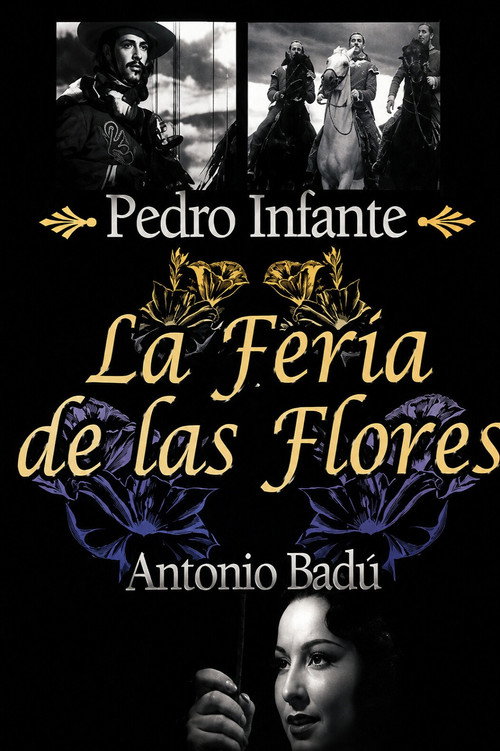
La feria de las flores
Ranchera melodrama/romance.
Found 237 results Back to Home
Ranchera melodrama/romance.


Two men and two women meet and pair off (m/w x 2) during the town Festival in San Marcos. Later, weddings.
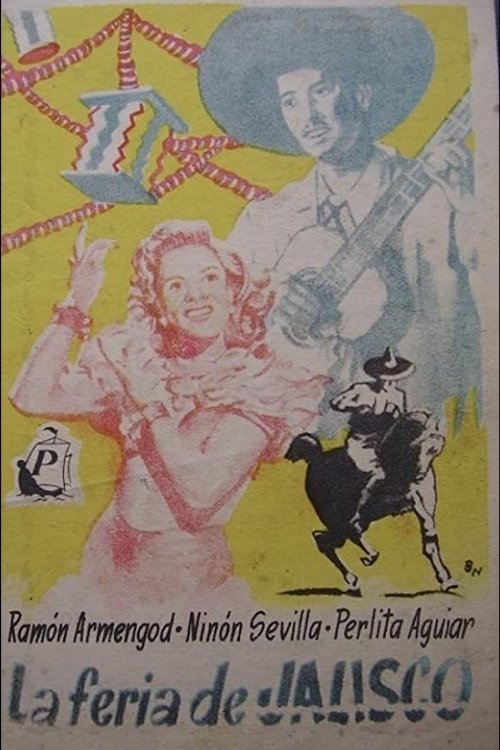
This lighthearted 1 hour and forty minute musical-comedy was written by its Director, Chano Urueta and was first released on May 20, 1948. Its female lead, is a Cuban-born beauty with the stage name of Ninion Seviilla. S

Two cowboy bon vivants on the shady side of the law travel from county fair to county fair...
Recovered Zulueta short.
Documentary.
Filmed by cameramen from Peruvian Films in Guayaquil, during the festivities held in November 1931 for the arrival in Ecuador of the steamship Urubamba, capturing views of the itinerary followed by the ship through the p


Fátima - Ópera-Rock is not just a show; it is a profound reflection on Portugal, its history, and the cultural, spiritual, and human dimensions that project our country onto the world stage, touching people from every co
Short documentary about the Tabasco Carnival, one of the most important in Mexico
A girl in a Sevillian dress dances to the sound of music played a couple of men at the "Féria Sevillanos" [sic] during the Exposition Universelle de Paris - though she does not look a real Sevillian dancer.
A tribute to the great fado diva.
Filmed by Manuel Morales.
A newsreel from the 1940s depicting the Feast of St. James in the province of Santiago de Chuco shows the Quiyayas, a traditional dance of colonial origin, dancing in striking jipijapa hats adorned with flowers, multicol


Recognizing the undeniable role of Filipe La Féria in the history of Portuguese theater, this documentary seeks to explore the thinking that drives creation and unveil the philosophy hidden behind the stage.




José Eduardo, known as Zé, owns a small football school and wins a trip with his wife and blogger daughter to Cartagena in a raffle. José Eduardo, known as Edu, is a successful businessman who is going on vacation with h


A boy is left alone in a Jewish neighborhood in the year of 1970, where both world cup and dictatorship happen in Brazil.
Electromagnetic landscapes and marginal poetry on a holiday.
